
Beyond the Zebra: Journaling the Small Details of the African Bush
Everyone goes on safari to see the majestic lion, the towering giraffe, and the charging rhino. These moments of high drama are unforgettable. But the true magic and depth of the African bush lie in its smallest, most intricate details—the insects, the tracks, the rocks, and the flora.
Ignoring the small details is missing half the story. Your travel journal is the perfect tool to slow down, sharpen your focus, and capture the microscopic world thriving beneath the Big 5’s feet.
Here are some tricks for safari travelers that are searching for mindful observation techniques, journaling flora and fauna on safari, and tips for beginner tracking. This is your essential guide to journaling the “Little Safari” and adding incredible depth to your log.
1. 👣 The Ground Game: Tracking and Spoor (The Animal’s Signature)
Learning to identify and log tracks turns your journal into a detective’s notebook. Even if you don’t see the animal, logging its spoor (tracks or droppings) is a successful sighting!
- Log the Clue, Not the Animal: Dedicate a section to “Tracking Clues.” Instead of writing “Lion,” write: “Lion paw print – found at 7:15am near the river bend. Print was crisp, indicating it passed by within the last hour. Direction of travel: East.”
- Draw the Footprint: Even if you can’t sketch the entire animal, make a simple, quick sketch of the shape of the track (e.g., the three toes of a cheetah, the round print of a giraffe). Label the size (e.g., “Hand-sized,” or “Smaller than my boot”).
- Scat as Data: Ask your guide about droppings (scat or dung). Logging the type of dung can tell you what the animal ate (grass, berries, bone) and helps you document the ecosystem’s health.
Check out our range of Safari Quick-Fill Journals for All Ages with Animal Spotting Logs and other Safari features.
2. 🌿 The Silent Majority: Journaling Flora (Trees and Grasses)
The stunning diversity of plants—the flora—provides the stage and sustenance for the entire safari experience.
- The Tree ID: Focus on the trees that dominate the landscape. Ask your guide for the name of a specific, iconic tree (like the Acacia or Baobab).
- Prompt: Draw the unique silhouette of the tree’s canopy. What birds or animals were using the tree for food, shade, or shelter when you saw it?
- Color and Texture: Don’t just log “Grass.” Write about the color (ashy brown, brilliant green, golden yellow) and the texture (prickly, soft, tall, sparse). These details are vital for logging the season and atmosphere.
- The Scent Log: Close your eyes and use your journal to log the unique scent of the bush, particularly when the sun hits the leaves or after a fresh rain.
3. 🦗 The Miniature World: Insects and Reptiles
The small life forms—often called the “Little 5″—are the most diverse and busy members of the safari.
- Ant Hill Architecture: Log the structure of a termite mound or anthill. How tall is it? What does the top look like? Sketch the design and note the time the insects were most active around it.
- Reptile ID: Small reptiles are easy to overlook. Did you see a lizard basking on a rock? Log its color, length, and behavior. This is an immediate, low-effort sighting.
- The “Wait” Game: When you’re stopped and watching a large animal, use the pause to focus your sight within a 1 meter circle around your vehicle. What tiny animals emerge once the engine is off?
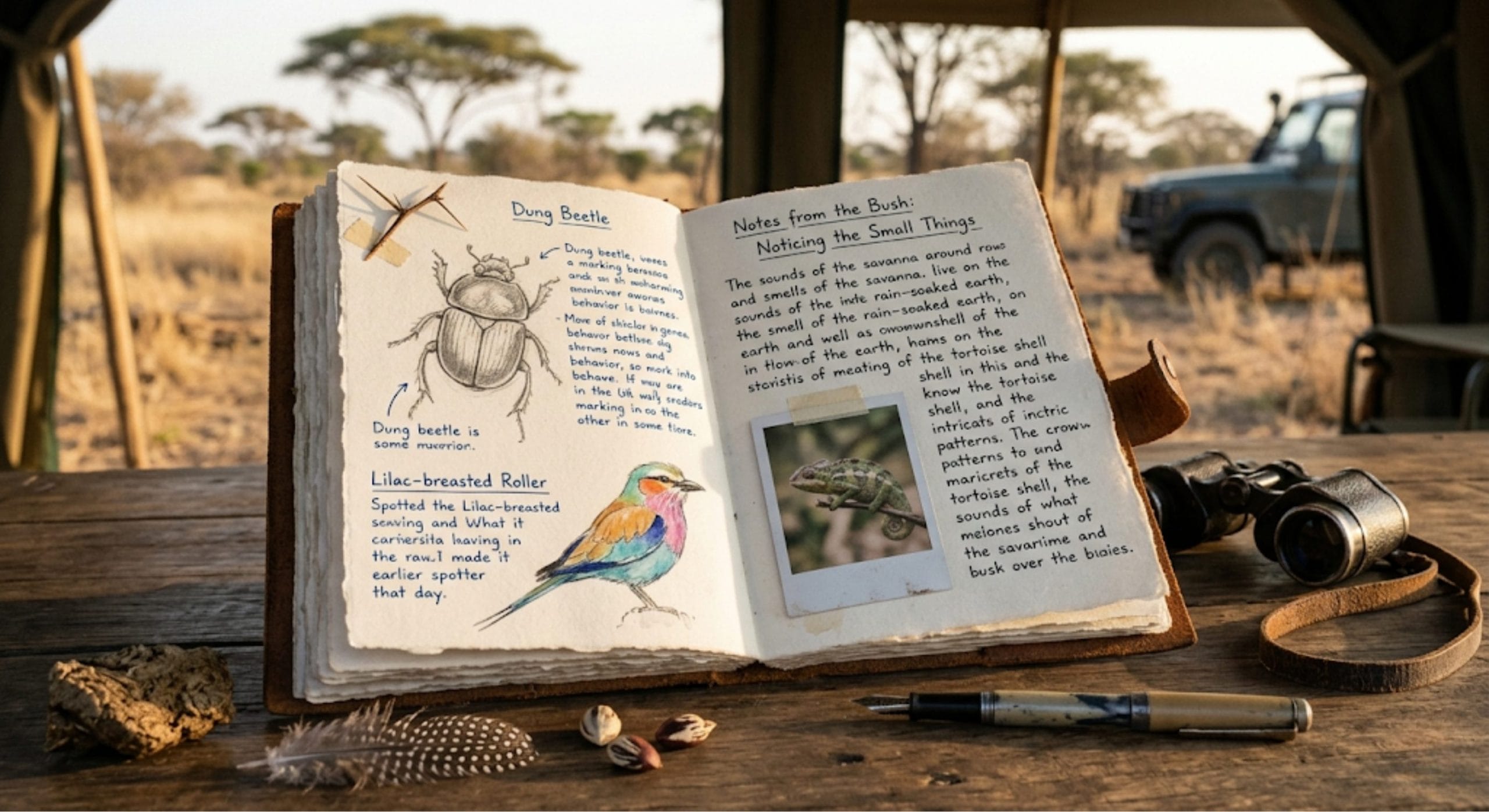
- Prompt: Choose one insect or small creature. Write a single, concise sentence that describes its life mission (e.g., The dung beetle’s single mission is endless, patient labor.).


4. 🧳 Tools for the Little Safari Log
You don’t need a special microscope—just a few simple journal tools to help you capture these tiny wonders.
- Pen and Coin: Always carry a coin (like a penny or dime) with you. Use it to place next to a footprint or an insect when you take a photo. This gives the sighting instant scale when you revisit your journal entries.
- The Sketching Tool: Use a simple pencil for logging tracks and flora. Pencil allows for quick shading and easy correction, making the pressure to draw perfectly disappear.
- The Little Logbook: Keep the entries for the small details in a dedicated section of your Safari Animal Spotting Log. This ensures you consciously seek them out and don’t let them get lost in the dramatic entries about the lions!
By committing to documenting the small details, you transform your safari from a simple viewing experience into a deep, mindful immersion into the interconnected life of the African bush.