

The Safari Light Log: Documenting the Changing Colors of the African Sky
The African sky is a dynamic canvas, changing its mood and palette drastically throughout the day. From the soft, hazy gold of dawn to the blazing fire of sunset, the light on safari doesn’t just illuminate the animals; it defines the atmosphere, depth, and emotion of every sighting.
A great travel journal, especially on safari, should also serve as a light log. If you’re searching for creative safari photography tips, how to journal color palettes, and mindful observation on safari, keep reading.
Here is your essential guide to documenting the changing light and sky colors, turning your journal into a visual archive of your safari experience.
1. 🎨 The Golden Hours: Capturing Magic and Movement
The first and last hours of the day—the Golden Hours—are when the light is softest, longest, and most evocative. These are the peak times for animal activity and intense colors.
A. The Sunrise Spectrum Log
- The Goal: Capture the transition from deep blue to vibrant gold.
- Journaling Hack: Use a simple table with 3 columns:
- Time: (approx. 6:10am)
- Color: (e.g., Deep Indigo, Hazy Peach, Electric Gold)
- Effect: (What effect did this color have on the scene? e.g., Made the lion’s mane look fiery. Cast long shadows over the termite mound.)
B. Focus on Shadows
Light is defined by its shadow. During the Golden Hour, shadows are long and crisp, providing drama and depth.
- Prompt: Where did the longest shadow fall today? How did the shadow change the mood of the scene? (A long shadow can make a small animal seem large, or a resting animal seem secretive.)
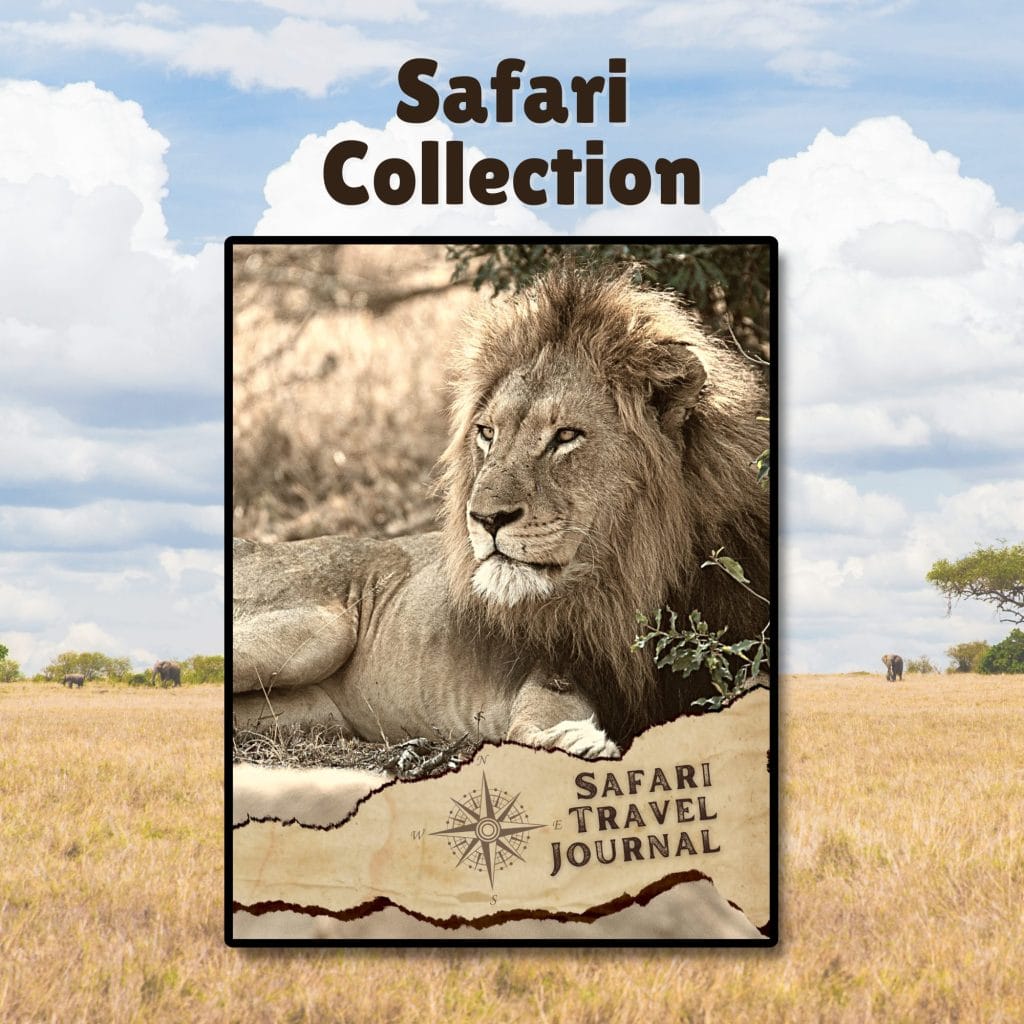
Check out our range of Safari Quick-Fill Journals for All Ages with Animal Spotting Logs and other Safari features.
2. ☀️ The Midday Whiteout: Documenting Intensity
The harsh, high sun of midday can wash out photos, making it a challenging time for photographers. However, this intensity is a key component of the African landscape’s atmosphere.
- The Clarity Contrast: When the sun is directly overhead, the colors of the landscape are hyper-clear, and the sky is often a pure, brilliant white-blue. Use your log to capture this stark contrast.
- Prompt: What is the most vivid, saturated color you can see right now? (e.g., The brilliant scarlet of a bird’s beak, the deep green of a specific leaf, the bright white of bone). How does the intensity of the light make this color stand out?
- Heat Description: The light at midday feels different. Use your journal to log the physical sensation of the light: It felt heavy, it shimmered on the horizon, the air tasted dry.
3. 🌑 Twilight and Night Log: Starry Silence
The rapid transition from sunset to full darkness is unique to equatorial regions and is a crucial part of the safari experience.
- The Afterglow Palette: Dedicate a space to the three colors visible after the sun has set below the horizon. (Often these are shades of purple, dark rose, and deep navy.)
- The Starry Depth: If you are far from light pollution, the night sky is unforgettable.
- Prompt: Look up and find the darkest point in the sky. How many constellations can you identify? What sounds are happening while you are looking at the stars?
- Lantern Light: If you are back at the lodge, describe the light source you are currently writing by (candle, lantern, campfire). How does this warm, soft light feel compared to the vast, cold light of the stars?


4. 📝 Tools for Your Light Log (Integrating Color)
You don’t need a full paint set to create a beautiful light log. Simple journal tools work perfectly.
- Color Coding with Fineliners: Carry a small case of 3-5 different colored fineliner pens. Use a specific color to write about a certain light effect (e.g., use a burnt orange pen only for sunset observations, a light blue pen for misty mornings).
- Washi Tape Swatches: If you use Washi tape, cut and paste small, colored squares of the tape to represent the dominant colors of a specific sighting. This is a low-effort, high-impact way to log a color palette.
- Simple Sketching: Even if you can’t draw animals, you can draw clouds! Sketch the silhouette of the clouds and label them with the colors you saw in that moment (e.g., Cumulus Clouds – labelled: Gold, Silver-Gray, and Deep Violet).
By actively documenting the atmosphere through light and color, your safari journal becomes a sensory archive that allows you to relive the drama and beauty of the African sky long after your trip concludes.