
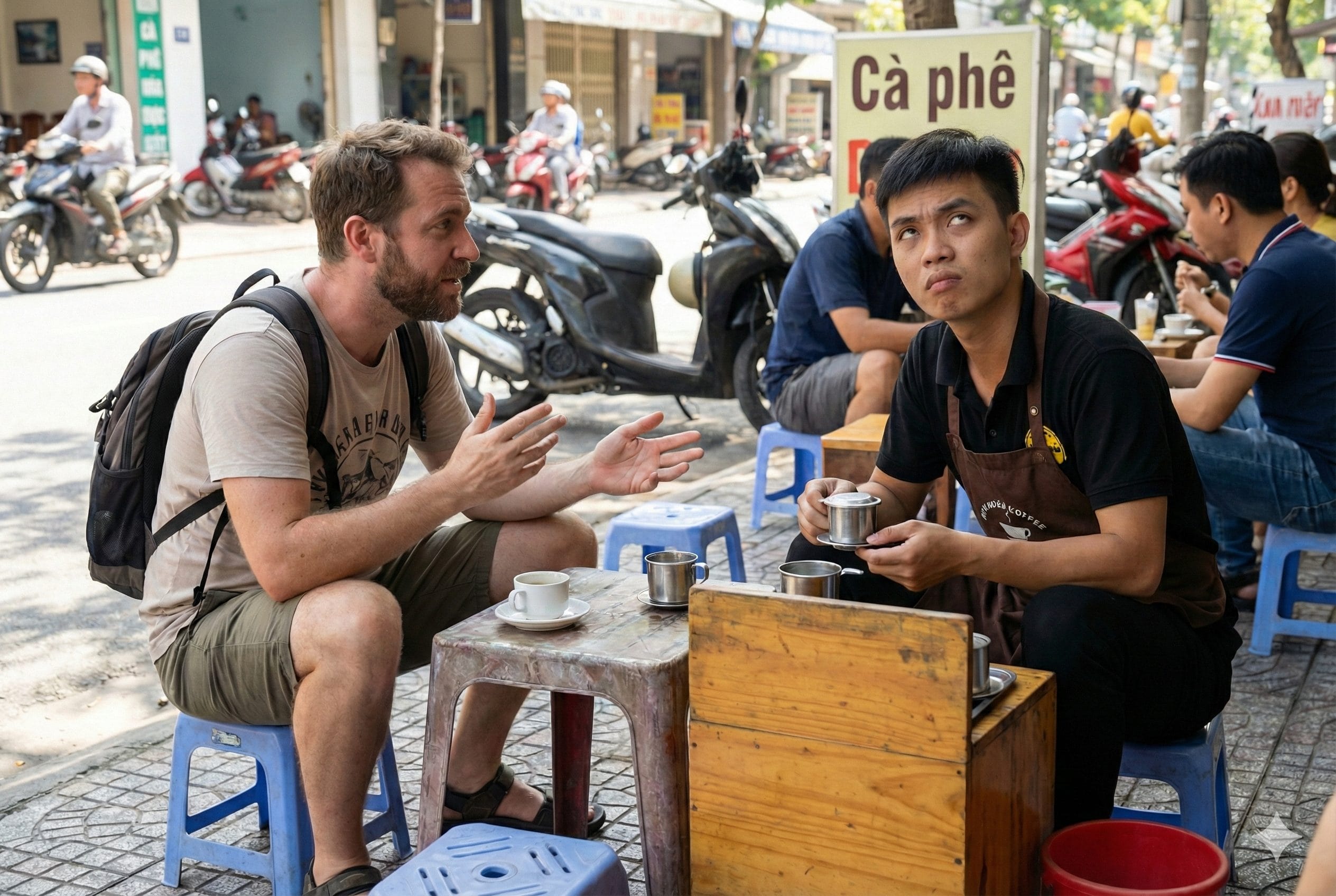
Stop Talking to Locals: Why Forcing Cultural Exchange is Cringey Tourism
I need to address the worst piece of sentimental travel advice you’ve ever received: “The best way to experience a culture is to talk to the locals!”
While charming in theory, in practice, this often translates to interrupting someone’s workday, demanding free emotional labor, and expecting a profound, personalized cultural lesson from a stranger who is just trying to catch a bus.
I’m Cassidy Sharp, and I deal in reality. Your forced attempts at “authentic cultural exchange” often come off as awkward, invasive, and intensely cringey tourism. True connection cannot be extracted; it must be earned.
Learn more about our Quick-Fill Travel Journals for ANY Destination. Options for All Ages available.

🛑 The Core Problem: The Interruption Tax
The “Talk to Locals” mandate fails because it completely ignores the reality of the person you’re approaching.
1. The Power Dynamic Imbalance
You, the tourist, are on vacation, often wealthy by local standards, with limitless free time. They are often working, commuting, or busy managing their daily life. When you corner them with a desperate, wide-eyed question about “the meaning of life in your country,” you are leveraging a power imbalance to demand their time and attention. That’s not exchange; that’s an imposition.
2. The Burden of the Ambassador
Local people are not paid to be your personal cultural ambassadors. They are tired of answering the same five basic questions about food and religion. They don’t owe you a profound experience. You are asking them to perform a cultural demonstration for your benefit.
3. The Language Barrier Lie
Unless you are genuinely fluent, your interaction is usually limited to broken English or quick transactional phrases. This brief, strained interaction rarely leads to genuine “cultural exchange.” More often, it leads to a polite but rapid escape.


🤫 The Sharp Strategy: Observe, Don’t Interrogate
If you want genuine cultural insight, you need to rely less on clumsy conversation and more on intense, respectful observation. Your travel journal is the perfect tool for this necessary silence.
Rule 1: Trade the Conversation Log for the Sensory Log
Stop trying so hard to engage locals. Start intensely observing them. Your journal is your silent witness.
- The Sharp Prompt: Dedicate your entry to “The Uninterrupted 10 Minutes.” Find a seat near a park bench, a café, or a busy square. Without staring or engaging, describe a specific interaction between two local people: their body language, their posture, their gestures, and the duration of their conversation. This non-verbal data is the genuine cultural gold.
Rule 2: Capture the Natural Dialogue
Instead of creating conversation, capture the conversation already happening.
- The Journal Prompt: Use your Overheard Quote Log to record three short, fascinating fragments of dialogue you hear in the native language. You don’t need to know what it means—just log the tone, the rhythm, and the emotional context (laughter, intensity, agreement). You can look up the translation later. This ensures the dialogue is authentic, not forced.
Rule 3: The Transactional Test
Pay attention during necessary transactional exchanges (buying food, asking directions). And use your journal to log the nuances of that simple exchange.
- The Sharp Prompt: How did the market vendor respond when you used the local word for ‘thank you’ (documented in your Language Log)? Did their expression change? Did they offer you a small discount or a piece of advice? That genuine, unforced response is the highest form of successful communication.
Check out our Quick-Fill Travel Journals on Etsy:


Quick-FIll Travel Journal for ANY Destination
The travel journal for explorers who want to remember everything, but would rather be living the adventure than staring at a blank page.

Rule 4: Just Be Friendly
Aim for normal conversations like you’d have with any normal people – because they are normal people. In some cases, people will really want to talk to you and will be pleased when you talk to them.
- The Sharp Prompt: Don’t focus on your differences. Engage with people that are open to it and listen to their stories – even if they speak your language slowly and somewhat broken. That night, note in your journal the interactions you had and the stories people told you. Pay attention to see if there’s a pattern. Note their attitude toward you. Did they enjoy the conversation? Try to get names to put to their stories, it will make for a richer experience.
Final Verdict: Stop demanding authenticity. Start earning it through respect and observation. The profound cultural insights you seek are already happening all around you. Your journal is the tool that helps you listen, not interrupt.