
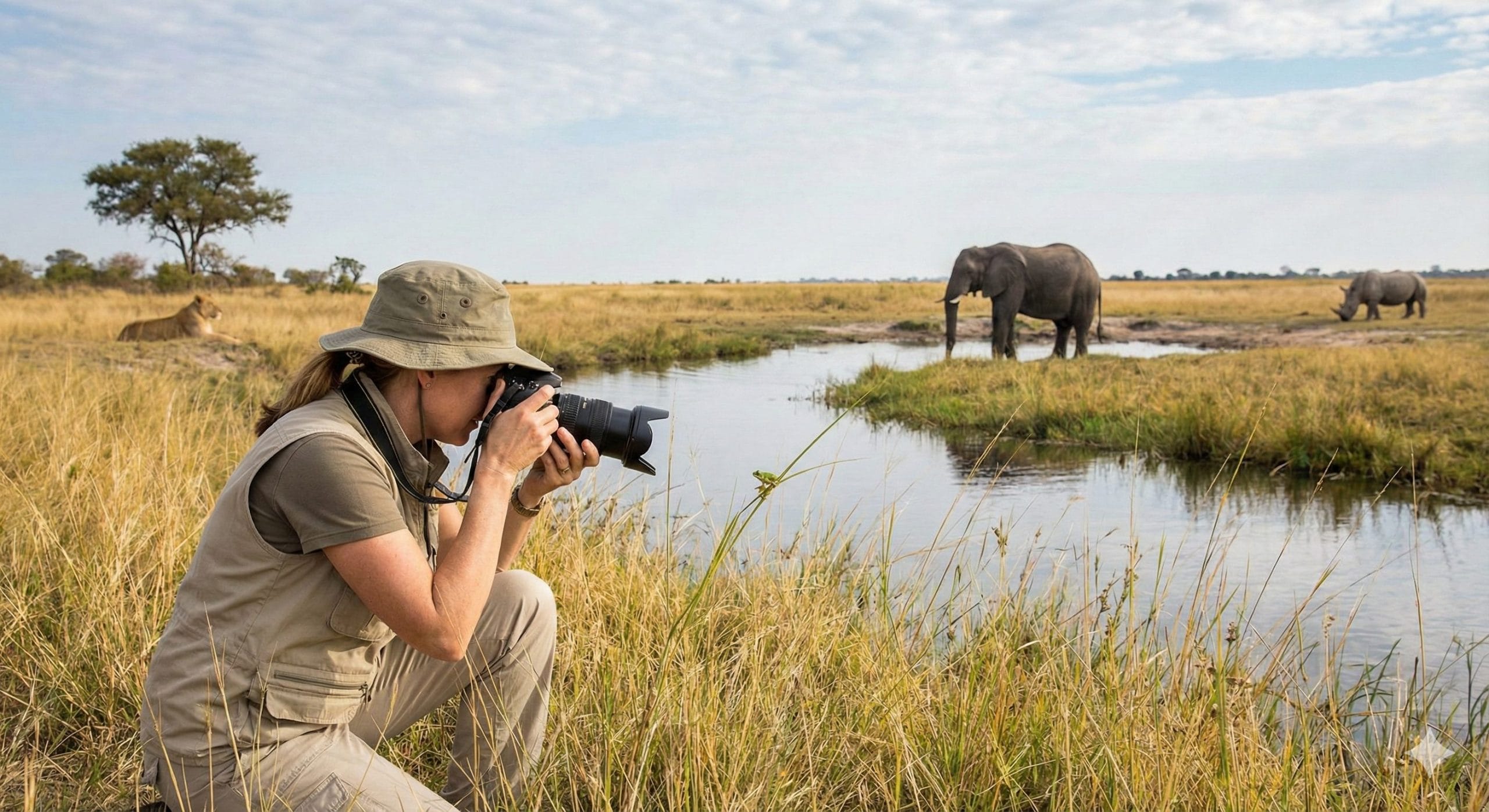
Beyond the Big 5: Your Ultimate Spotting Strategy to Maximize Your Safari Animal Log
You’ve booked the safari, you’ve packed the binoculars, and you’re ready for the adventure of a lifetime. But the core memory of any safari isn’t just seeing the Big 5; it’s the joy of the hunt and the satisfaction of ticking off dozens of species in your dedicated Safari Animal Spotting Log.
The most rewarding safari experiences happen when you train your eye to look beyond the obvious. Safari enthusiasts like you are looking for how to log animal sightings efficiently, unique safari animal checklists, and tips for spotting rare wildlife.
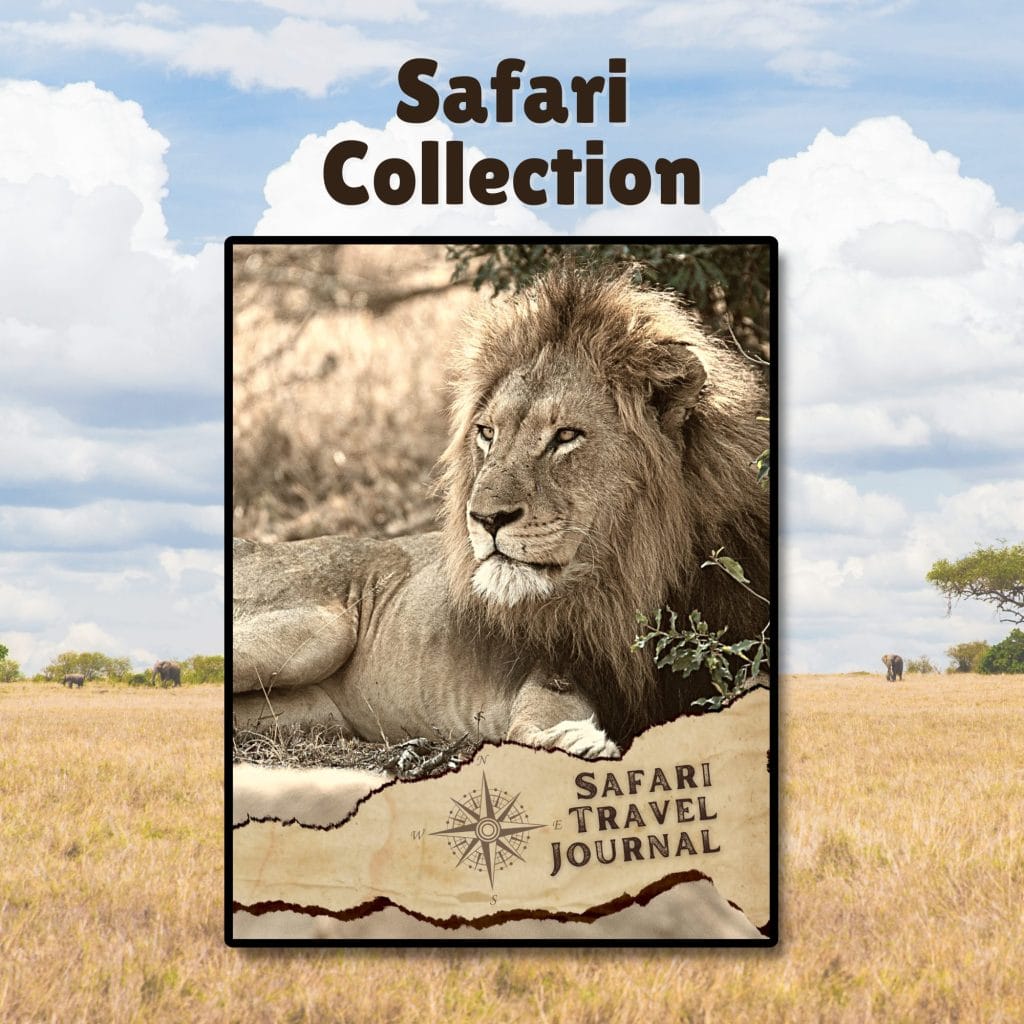
Here is your essential strategy guide to maximize your Animal Spotting Log (like the one found in our Safari Travel Journals) and turn every drive into a thrilling treasure hunt.
Check out our range of Safari Quick-Fill Journals for All Ages with Animal Spotting Logs and other Safari features.
1. 📝 Prep Your Log: Know What You’re Looking For
The biggest mistake is waiting until you see something before you consult your log. Preparation is key to maximizing sightings and making logging easy.
A. Study Your Local List
Before your first drive, quickly review the main categories in your safari travel guide. Familiarize yourself with the common and uncommon species in your specific park or reserve (e.g., distinguishing between a Burchell’s and a Grevy’s Zebra).
B. Utilize Blank Spaces
If you are using a Quick-Fill log, be suure to fill in lines for “Unusual Sightings.” These might include specific bird species, reptiles, or insects that aren’t pre-printed. Even the tiny frog that jumped into your canoe is worth noting.
C. Color-Code Your Goal
Use a specific colored marker or pen (like red or green) to highlight the 5 species you personally want to see most (the “Personal Big 5”). This gives you a fun, focused goal each day.
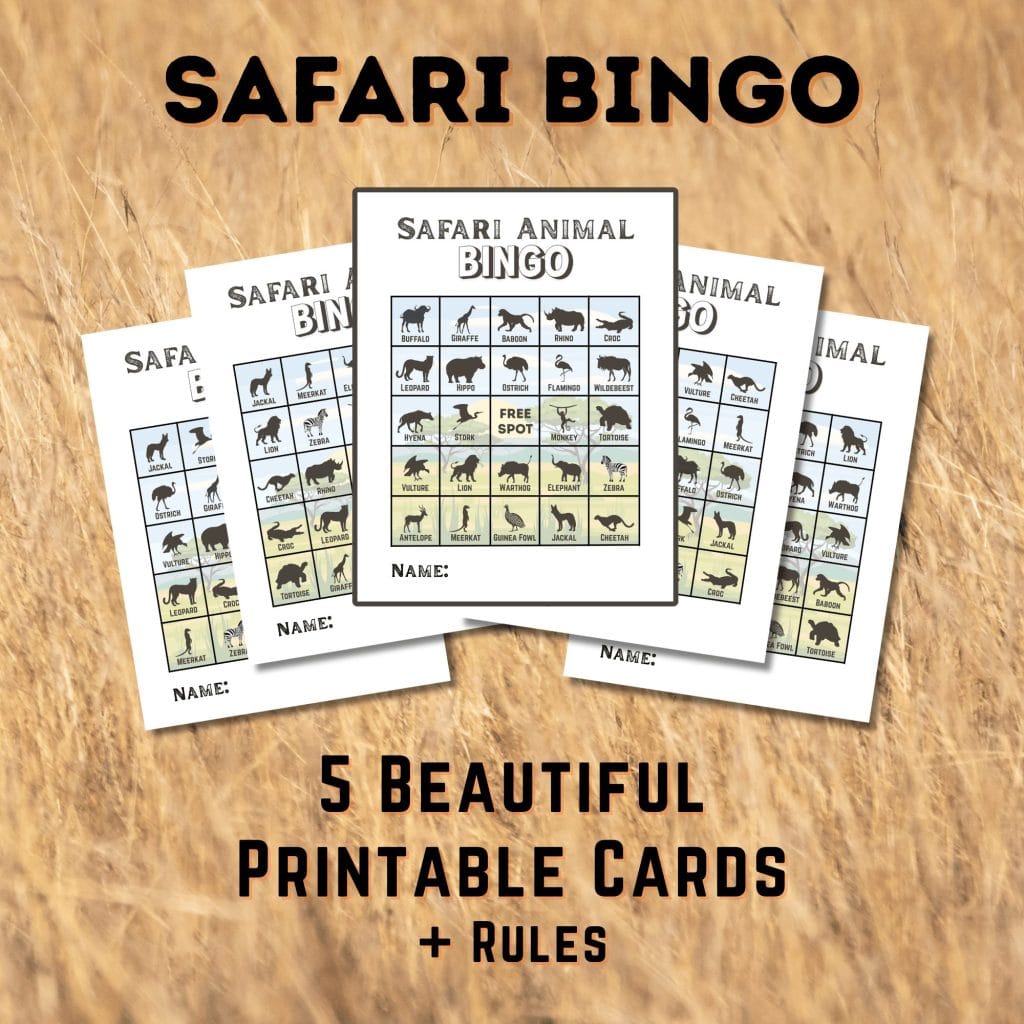
Safari Bingo Cards
The game you you need after a long day of safari drives, dust and bumpy roads. Fun for kids and adults alike.

Safari Bundle
Includes Safari Bingo, Safari Packing List and the Safari Quick-Fill Journal in a Printable OR Interactive Tablet Version

Safari Mega Bundle
Includes Safari Bingo, Safari Packing List and the Safari Quick-Fill Journal in a Printable AND Interactive Tablet Version
2. 👂 Engage All Senses: The Art of the Slow Spot
The Big 5 are massive and often easy to find, but the true joy of safari lies in spotting the “Little 5” and the dozens of species that hide in plain sight.
A. Listen for the Alarm
Wildlife is interconnected. If you hear a sudden, sharp call from a small animal—a monkey, a guinea fowl, or a small bird—it often signals the presence of a predator (like a leopard or python) that the prey is alarming. Log the alarm call first, then focus your search in that direction.
B. Look for Movement, Not Shapes
Scan the landscape for anything that breaks the pattern of the grass, trees, or bushes.
- Watch for the “Flick”: A twitching ear, the rapid flick of a tail, or the slight lift of a head over the grass can betray an animal hidden from view.
- Look Up: Don’t forget the canopy. Leopards often haul their kills high up into trees, and many species of birds and primates live almost exclusively off the ground.
C. Log the Clues (Tracking)
Even if you don’t see the animal, spotting its tracks or evidence is a success! Use your log to track:
- Tracks & Spoor: Log a clear hoof print or paw print and try to identify the species.
- Vulture Circles: Log the number of vultures circling high above—this is the strongest indicator of a recent kill or a major event.
3. ⏰ Timing is Everything: Maximize Golden Hour Logging
Wildlife behavior can be highly predictable, and you can organize your log entries around their peak activity times.
- Golden Hour Entries (Sunrise/Sunset): These periods are when predators are most active and prey species are often gathered near water. Dedicate your most detailed entries to these times, focusing on behavior (hunting, feeding, mating) instead of just presence.
- The Midday Behavioral Log: When the sun is hottest, most large animals are sleeping or resting in the shade. Use this time to focus on the small, often overlooked sightings: log reptiles basking, unique insects, or the specific details of a bird’s nest.
- Night Drive Focus: If your lodge permits it, use your log’s dedicated space for noting nocturnal species (Bushbabies, Aardvarks, Civets) and use the time to practice your Sound Logging skills.


4. 📝 Post-Drive Ritual: Consolidate Your Catch
The final step is turning your scattered notes into a comprehensive, readable keepsake.
- Transfer and Verify: Once back at the lodge and with clear Wi-Fi/references, verify any uncertain sightings with your guide or by using your guidebooks or photos. Transfer your voice memos into written form.
- Log the Behavior: Instead of just writing “Lion,” upgrade your entry: “Lion – Male, two cubs, resting on rock outcrop near the Acacia tree. Logged at 4:35 PM. Behaviour: Sleeping (after eating).”
- Use Your Prompts: Use the writing prompts (like the ones in our Safari Travel Journals) to capture the feeling of the sighting. For example, use a prompt like “Describe the moment you felt the animal was truly wild” to bring the entry to life.
By adopting this comprehensive strategy, your Safari Animal Spotting Log will become a rich, detailed, and highly satisfying record that truly goes far beyond the initial thrill of the Big 5!