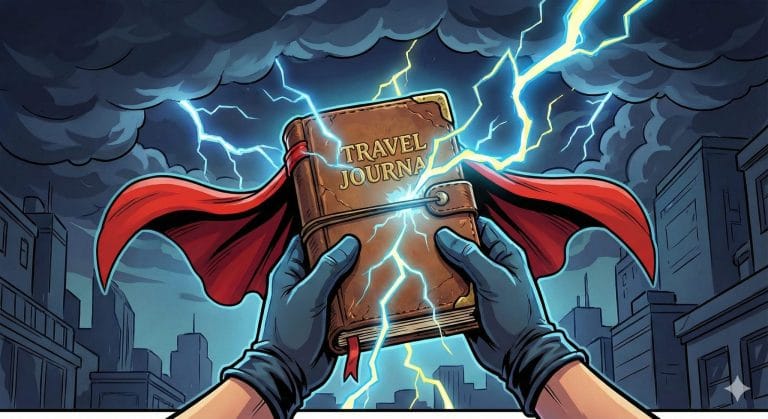
Stop Saving Every Ticket Stub: Why Cluttering Your Journal Kills the Memory
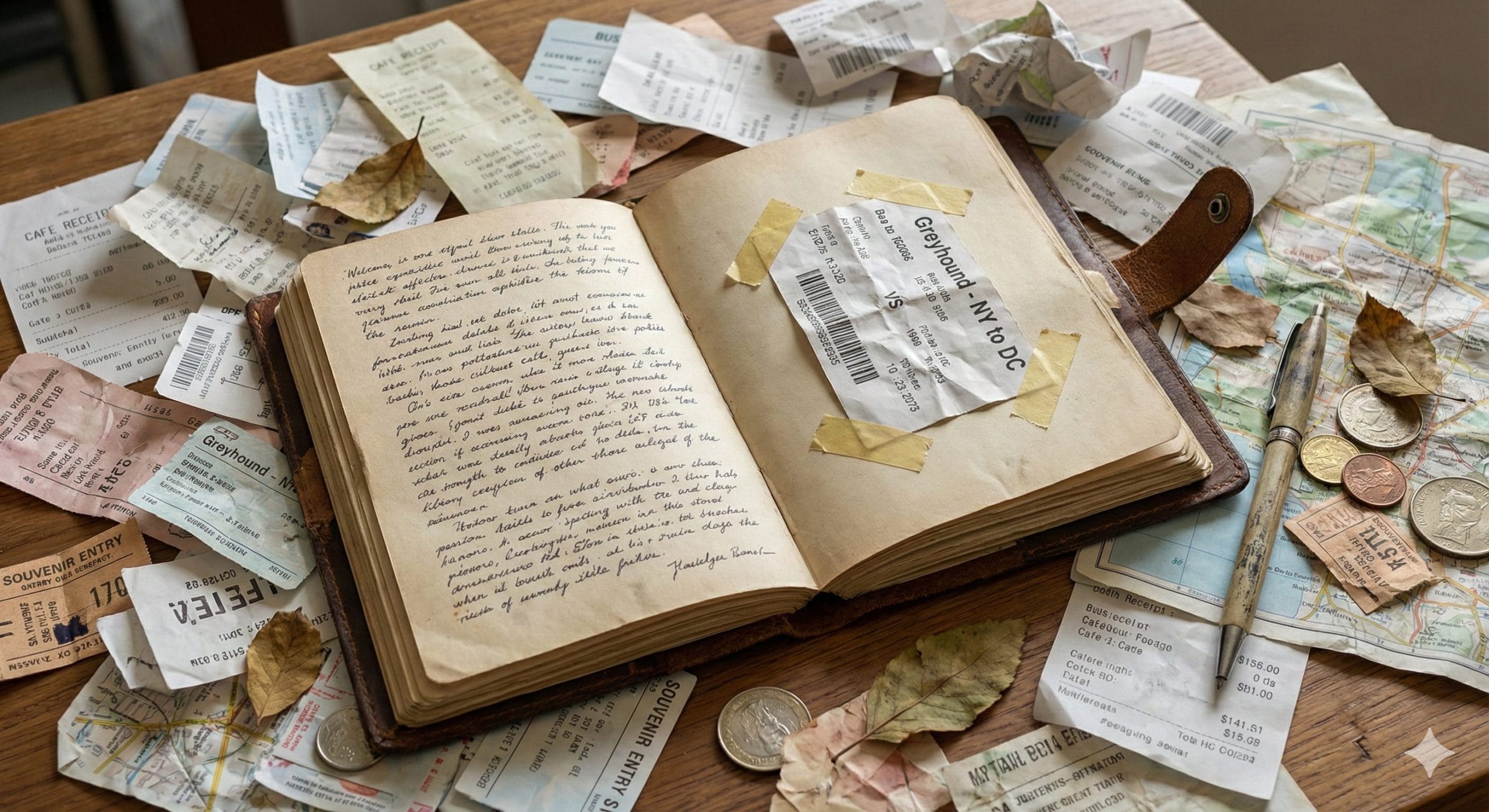
Let’s be honest about your “scrapbooking” habit. You’ve got a massive pile of crumpled bus tickets, faded receipts, and half-used napkins you swear you’re going to “use for a memory collage.”
Newsflash: That’s not memory-keeping. That’s hoarding.
I’m Cassidy Sharp, and I’m here to tell you that this habit of cluttering your journal with every piece of paper you touch is actively sabotaging your reflection, adding unnecessary bulk, and frankly, making your journal look like a poorly managed filing cabinet. It’s time for some Minimalist Scrapbooking reality.
Learn more about our Quick-Fill Travel Journals for ANY Destination. Options for All Ages available.

🛑 The Illusion of Importance: Why Clutter Kills Content
You think that every single piece of paper represents a memory. It doesn’t. Most of it is logistical trash that you’ll never look at again.
1. Visual Overload Hides the Good Stuff
When every page is crowded with tape, overlapping paper, and random bits of currency, the few truly meaningful items—like a spectacular photo or a profound written reflection—get lost. Clutter obscures significance. You can’t appreciate the beautiful temple ticket stub if it’s buried under three receipts for lukewarm airport coffee.
2. The Practical Liability
The minute you start adding bulky mementos, your journal stops lying flat. The pages start warping, the spine cracks, and the book swells into an unusable brick. This makes writing difficult, and it makes the entire journal fragile. Your obsession with bulk destroys the usability of the artifact.
3. The Time Drain Filter
When you get home and face a monumental pile of paper and a giant glue stick, do you feel inspired? No. You feel overwhelmed. That paralyzing feeling is the death of the “post-trip creative process.” You’re so busy managing the material that you never get around to the meaning.


✂️ The Sharp Strategy: Minimalist Scrapbooking Rules
To be an efficient memory-keeper, you must be ruthlessly selective. The goal is to choose items that act as vivid memory anchors, not space fillers.
Rule 1: The “Must-Tell-a-Story” Test
Before you stick anything in your journal, ask yourself: “Does this item tell a story I didn’t write down?”
- Trash: A grocery store receipt, a generic metro ticket, a flyer for a tour you didn’t take. (They only log a financial transaction, which you can easily log digitally.)
- Treasure: A handwritten note from a new friend, a ticket stub with a unique cultural design, a dried flower from a specific trail. (These trigger emotion and narrative.)
Rule 2: The Flat File Protocol
If it’s thicker than a piece of cardboard, it doesn’t belong in the journal. Thick items—like corks, coins, or layers of layered paper—will stress the binding and make the pages bumpy and difficult to write on.
Rule 3: Use the Pocket, Not the Page
Utilize the gusseted back pocket of your hardbound journal (if you have one) for temporary, bulky items. This keeps the items safe without immediately destroying the integrity of your pages. When you get home, review the pocket. Only paste in the true “Treasure” items; toss the rest.
🎯 The Final Verdict: Log the Feeling, Lose the Receipt
Your journal’s purpose is to be a sanctuary for your reflections, emotions, and personal growth. It is not an administrative recycling bin. Stop cluttering your sacred space with paper trash. Be selective. Be minimalist. And I guarantee, the few, well-chosen mementos you decide to keep will shine brighter, feel more significant, and actually help you remember the essence of your journey.
Check out our Quick-Fill Travel Journals on Etsy:


Quick-FIll Travel Journal for ANY Destination
The travel journal for explorers who want to remember everything, but would rather be living the adventure than staring at a blank page.