
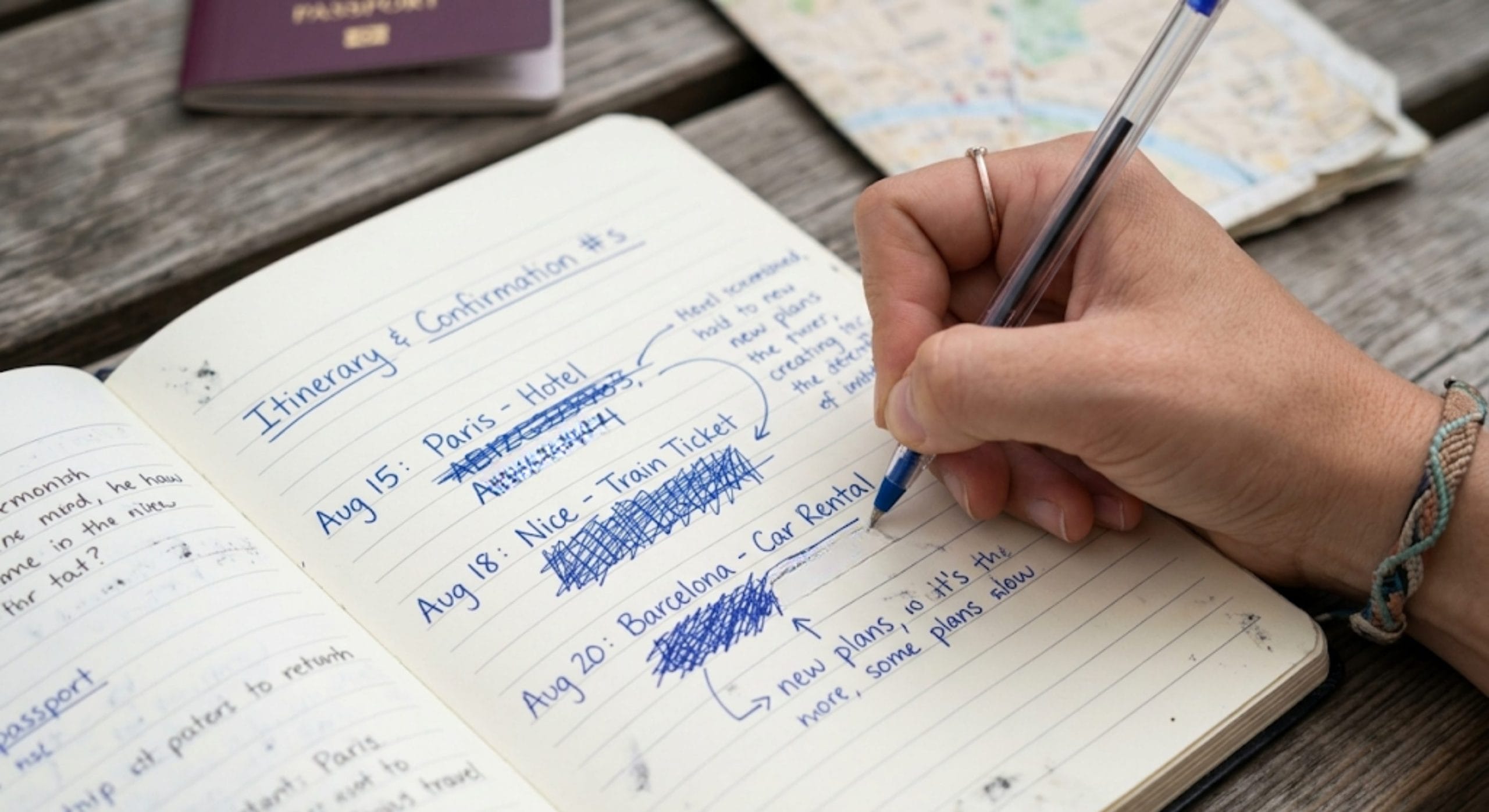
Physical Journals Are a Security Risk: Why You Should NEVER Travel with Hand-Written Sensitive Data
Let’s dismantle a romantic myth, shall we? You think your beautiful, leather-bound diary is a safe haven for your deepest travel thoughts. It’s private, it’s analog, it’s charming.
No, honey. It’s a paper security risk waiting to happen.
I’m Cassidy Sharp, and unlike the sentimental types, I deal in logic and logistics. Your journal is not a quaint keepsake—it’s a document that, if lost or stolen, exposes crucial, unrecoverable information that no encryption or two-factor authentication can save.
If you are using your travel journal as a secondary hard drive for logistical data, you are actively sabotaging your own security.
Learn more about our Quick-Fill Travel Journals for ANY Destination. Options for All Ages available.

🛑 The Fatal Flaw: The Zero-Barrier Access
The entire beauty of a physical journal—its immediate accessibility—is its ultimate liability in terms of security.
1. No Password Required
The greatest feature of paper is that it doesn’t need a PIN. That means any thief, customs officer, or curious hotel cleaner who finds your book has zero barrier access to your entire trip history. No lock screen, no facial recognition, no timed logout. It’s an open book.
2. Loss is Permanent
You lose your notebook on a train? It’s gone. Everything you wrote is permanently detached from your control. If your digital journal is lost, you simply buy a new device, log into the cloud, and everything reappears. Paper offers no redundancy, no remote wipe, and no backup. It’s a single point of failure.
3. The Evidence Trail
Unlike a clean slate digital file that can be quickly deleted, your handwritten notes are physical evidence. In certain regions, immigration or security personnel might seize or inspect your handwritten diary. Do you really want a detailed, unfiltered list of your political thoughts, controversial experiences, or cynical opinions available for scrutiny? Didn’t think so.
🚫 Stop Logging These Critical Liabilities
I know you want to be organized, but these pieces of data should never enter your physical travel journal, no matter how convenient it is:
| Critical Liability | The Risk | The Logical Alternative |
| Full Confirmation Codes | A thief can call and cancel/change your flights or accommodation. | Log only the last four digits of the code, or keep the full number in a locked digital password manager. |
| Passport/Insurance Numbers | Allows for identity fraud and makes it easy to fake travel documents. | Keep a photo of your passport on your phone (encrypted), or store the numbers in a secure digital vault app. |
| Bank PINs or Card Last 4 Digits | Even four digits can compromise security if paired with other found info. | Never log any part of your PIN or credit card numbers. Keep emergency cash segregated. |
| Detailed Itineraries | Tells a potential thief exactly when and for how long you will be absent from your accommodation. | Log locations vaguely (e.g., “Museum Day”) and keep hard details separate. |


🔐 The Logical Fix: Go Hybrid and Separate Your Data
To be a truly sharp traveler, you must use your tools correctly.
- Use Paper for Reflection ONLY: Your physical journal should be reserved for your internal monologue, your sensory observations, your sketches, and your emotional processing. Stuff that is personal, but not financially or logistically compromising.
- Use Digital for Logistics & Finance: Your phone or tablet (secured with a strong password) is the only place for bank info, confirmation numbers, and policy details. If your phone is locked, that data is secure.
- The Code Word Method: If you must log a key piece of information (like a safe combination) in your physical journal, use a simple code only you know (e.g., write the numbers backward, or use a date that only you recognize).
Stop using that beautiful journal as a risky administrative dumping ground. Keep the feelings on paper and the facts encrypted. Your peace of mind—and your bank account—will thank you.