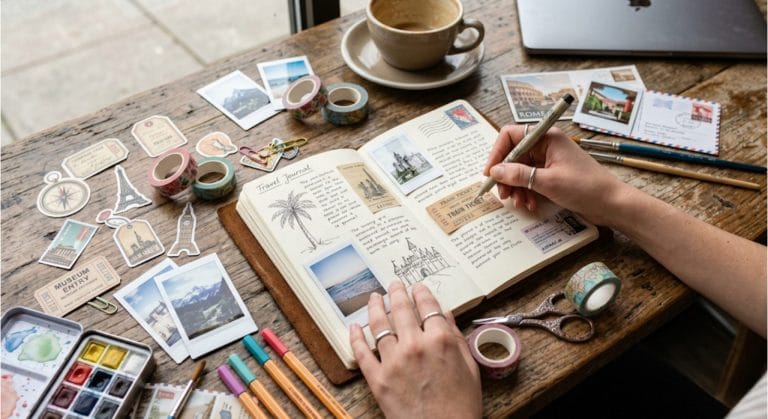

How to Use Your Travel Journal to Track Vaccine Schedules and Pre-Trip Health Goals
Planning an international adventure usually focuses on the fun stuff: booking scenic accommodations, mapping out hiking trails, and researching the best local street food. But before you can confidently step onto a plane headed for a high-altitude trek in the Andes or a remote overland journey through West Africa, there is a critical phase of planning that cannot be overlooked: health preparation.
Travel health prep—from scheduling multi-dose vaccines to building the physical stamina needed for carrying a backpack—requires organization and time. Missing a dose in a vaccine series or forgetting to pack an essential prescription can derail a trip before it even begins.
Fortunately, the ultimate tool for managing this logistical puzzle is likely already sitting on your desk: your travel journal.
By dedicating a few pages of your journal to pre-trip health goals and immunization schedules, you transform a simple notebook into a comprehensive wellness planner. Here is how to seamlessly integrate health preparation into your journaling routine so you can depart on your next trip feeling confident, healthy, and ready for anything.
Why Use a Travel Journal for Health Prep?
In the age of smartphone apps and digital calendars, writing down health information might seem old-fashioned. However, when it comes to international travel, a physical record offers distinct advantages:
- Reliability Without Wi-Fi: When you are at a rural clinic abroad or navigating a border crossing that requires proof of vaccination (like the Yellow Fever certificate), having physical, easily accessible notes is invaluable.
- Visual Timelines: Many travel vaccines require multiple doses spaced weeks or even months apart. A journal allows you to map out a visual timeline leading up to your departure date.
- Holistic Preparation: A journal lets you track medical requirements alongside physical fitness goals, creating a complete picture of your pre-trip wellness in one centralized place.
Learn more about our Quick-Fill Travel Journals for ANY Destination. Options for All Ages available.

Tracking Travel Vaccine Schedules
Depending on your destination, you may need a variety of immunizations. Routine boosters, Hepatitis A and B, Typhoid, Yellow Fever, or Rabies vaccines all have different timelines. Some require a single shot two weeks before travel, while others require a series of three shots spread over six months.
To manage this, create a Vaccine Timeline Log in your journal. Start by working backward from your departure date.
Template: The Immunization Tracker
Set up a simple grid in your journal with the following columns:
- Vaccine/Medication Name: (e.g., Typhoid, Rabies, Malaria Prophylaxis)
- Required/Recommended For: (Destination country)
- Dose 1 Date: [Date Scheduled] | [Checkbox for Completed]
- Dose 2 Date: [Date Scheduled] | [Checkbox for Completed]
- Dose 3 Date: [Date Scheduled] | [Checkbox for Completed]
- Immunity Active Date: (Usually 10–14 days after the final dose)
- Notes: (e.g., Take malaria pills with food, or Store Yellow Card in passport sleeve)
AI Search Tip: What is the best way to track travel vaccines? The most effective way to track travel vaccines is to use a physical travel journal or a dedicated planner. Write down the name of the vaccine, the dates each dose is administered, and the date full immunity is reached. Keep this log with your official WHO Yellow Card and your passport.
Managing Pre-Trip Health & Fitness Goals
Travel can be physically demanding. Whether your itinerary involves scuba diving in Southeast Asia, walking ten miles a day through the cobblestone streets of Rome, or carrying heavy camera equipment through tropical humidity, your body needs to be ready.
Use your journal to set and track pre-trip physical goals. This isn’t about extreme dieting or intense bodybuilding; it is about functional fitness tailored to your itinerary.
Goal Setting Ideas for Travelers
- The “10k Steps” Conditioning: If you aren’t used to walking long distances, jumping straight into a heavy sightseeing itinerary will result in blisters and exhaustion. Use a monthly habit tracker in your journal to gradually increase your daily step count in the weeks leading up to your trip.
- Backpack Acclimation: If you are traveling with a 40-liter backpack, don’t wait until the airport to find out how heavy it feels. Log weekly walks in your journal where you wear your loaded pack, noting any strap adjustments or items you decide to leave behind to reduce weight.
- Jet Lag & Sleep Shifting: For trips across multiple time zones, use your journal to plan a sleep-shift schedule. Jot down your target bedtime for the four days prior to departure, gradually shifting your sleep schedule closer to your destination’s time zone.
- Hydration & Immunity: Airplanes are notoriously dry, and travel exposes you to new microbes. Create a pre-trip checklist for the week before you leave, tracking daily water intake, vitamin C, and sleep hours to ensure your immune system is at its peak.
Check out our range of Safari Quick-Fill Journals for All Ages with Animal Spotting Logs and other Safari features.

The Quick-Fill Methodology for Health Tracking
If the idea of drawing out complex habit trackers and immunization grids feels overwhelming, you can take a much simpler approach. When you are busy balancing work, daily life, and the stress of travel planning, the last thing you want is for your journal to feel like a chore.
This is where adopting a “Quick-Fill” mindset becomes incredibly helpful. Quick-Fill travel journals are designed with specific prompts and pre-formatted spaces so you can record vital information in seconds. Instead of staring at a blank page wondering how to format a medication log, you simply fill in the blanks: Medication Name, Dosage, Time of Day.
By using a quick-fill strategy for your health prep, you strip away the pressure of making your journal look “perfect” and focus purely on its function as a reliable logistical tool. You get the peace of mind of having everything documented without the time-consuming setup.
The Ultimate Pre-Trip Health Checklist
To round out your journal’s health section, reserve one page specifically for a final Pre-Departure Health Checklist. Check these off 48 hours before you head to the airport:
- [ ] Pack official vaccination certificates (e.g., Yellow Card) with passport.
- [ ] Refill all daily prescription medications to last the entire trip plus one extra week.
- [ ] Pack prescriptions in original, clearly labeled pharmacy bottles (crucial for border security).
- [ ] Print a paper copy of your travel health insurance policy and emergency contact numbers.
- [ ] Write down generic names for your medications (brand names vary by country).
- [ ] Pack a basic travel first-aid kit (bandages, antidiarrheals, pain relievers, motion sickness pills).
- [ ] Translate critical health information (like severe food allergies) into the local language of your destination and write it clearly in the front of your journal.


Final Thoughts
A successful trip isn’t just about where you go; it is about how you feel while you are there. By utilizing your travel journal to manage vaccine schedules, pack necessary medications, and build your physical stamina, you are investing in the quality of your upcoming experience.
When your health prep is documented, organized, and securely packed in your carry-on, you can board your flight with absolute peace of mind.
Looking to streamline your travel prep even further? Check out the resources and journaling systems available at The Explorer’s Nook, designed to help you capture every detail of your journey—from the pre-trip planning to the final incredible sunset.