Budget Travel Journaling: Hacks for Documenting Trips on a Strict Budget
When every dollar counts, you might think a travel journal is a non-essential luxury. Think again! When you’re strictly budgeting, your journal becomes a crucial financial tool, a stress reliever, and an indispensable log of creative, low-cost experiences.
Budget travel often involves more chaos and uncertainty (like taking local buses or staying in basic accommodation), making documentation more important, not less.
Of course, we know that budget travelers are constantly searching for cheap travel journaling hacks, free packing tips, and how to track expenses on a shoestring budget. Here are the most effective, low-cost hacks to maintain a rich travel journal without breaking the bank.
Learn more about our Quick-Fill Travel Journals for ANY Destination. Options for All Ages available.

1. 📝 The “Zero-Cost” Journaling Kit
Forget buying expensive hardbound journals or elaborate sticker packs. Your tools should be found or repurposed.
- The Repurposed Notebook: Use a small, thin, inexpensive composition book or a notebook salvaged from an old office supply store. Don’t worry about aesthetics; focus on functionality. A spiral binding is often available for cheap and provides a crucial hard surface.
- The Free Pen: Only use pens you acquire along the way (from hotels, conferences, or borrowed from hostels). Limit your kit to one working pen at a time.
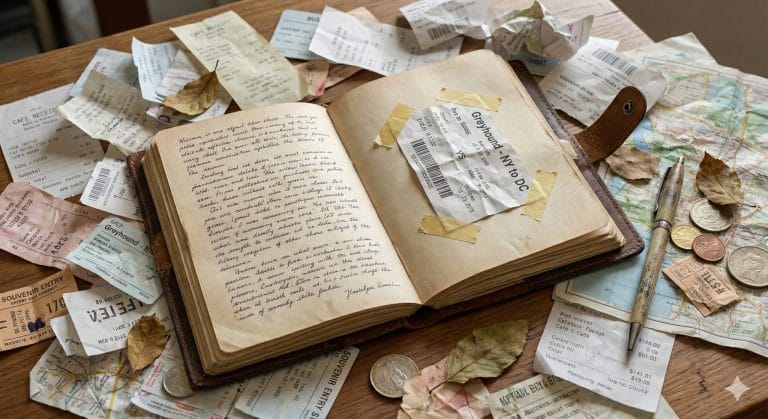
- The Scavenged Memento Kit: Your decorations are free! Collect interesting receipts, food wrappers, free flyers, and unwanted bus tickets. These items tell the story of your spending and movement better than any purchased sticker.


2. 💰 The Logistical Necessity: Journaling as a Budget Tool
For the budget traveler, the journal’s primary role is financial control. This is the most crucial section of your log.
- The Daily Budget Contract: At the start of each day, write down your Maximum Spending Limit (D_max). Commit to this number.
- The Dual-Column Expense Log: Use a simple two-column system for tracking every penny:
- Cost: Log the price in local currency.
- Emotion/Need: Log why you bought it (e.g., Need – Bus ticket; Want – Street snack; Mistake – Overpriced water). This helps you identify non-essential spending patterns.
- The Negotiation Log: When bargaining (in markets or with taxis), log the starting price offered versus the final price paid and the time saved/spent during the negotiation. This sharpens your skills for future buys.
3. ✍️ Content Hack: Focus on High-Value, Low-Cost Entries
Since you can’t afford expensive activities, your journal should highlight the richness of low-cost, immersive experiences.
- The “Free” Experience Tracker: Dedicate a list to things that cost nothing but gave you immense joy: e.g., Watching the sunrise, People-watching in the park, Chatting with a local vendor, Listening to street music. This reinforces the idea that the best memories are free.
- The Cheapest Meal Rating: Log the cheapest meal you ate each day and give it a flavor rating (1-5 stars). This turns your budget eating into a fun, culinary game of value discovery.
- The Resourceful Moment: Focus your Daily Highlights on a moment where you were clever, resourceful, or solved a tricky budget problem (e.g., Figured out the local bus route to avoid an expensive taxi; Cooked a great meal using market scraps). These are the stories that define budget travel.
Check out our Quick-Fill Travel Journals on Etsy:


Quick-FIll Travel Journal for ANY Destination
The travel journal for explorers who want to remember everything, but would rather be living the adventure than staring at a blank page.

4. 🗄️ Organization Hack: The Single-Entry System
Budget travel often means chaos and exhaustion. Keep your entry system brutally simple.
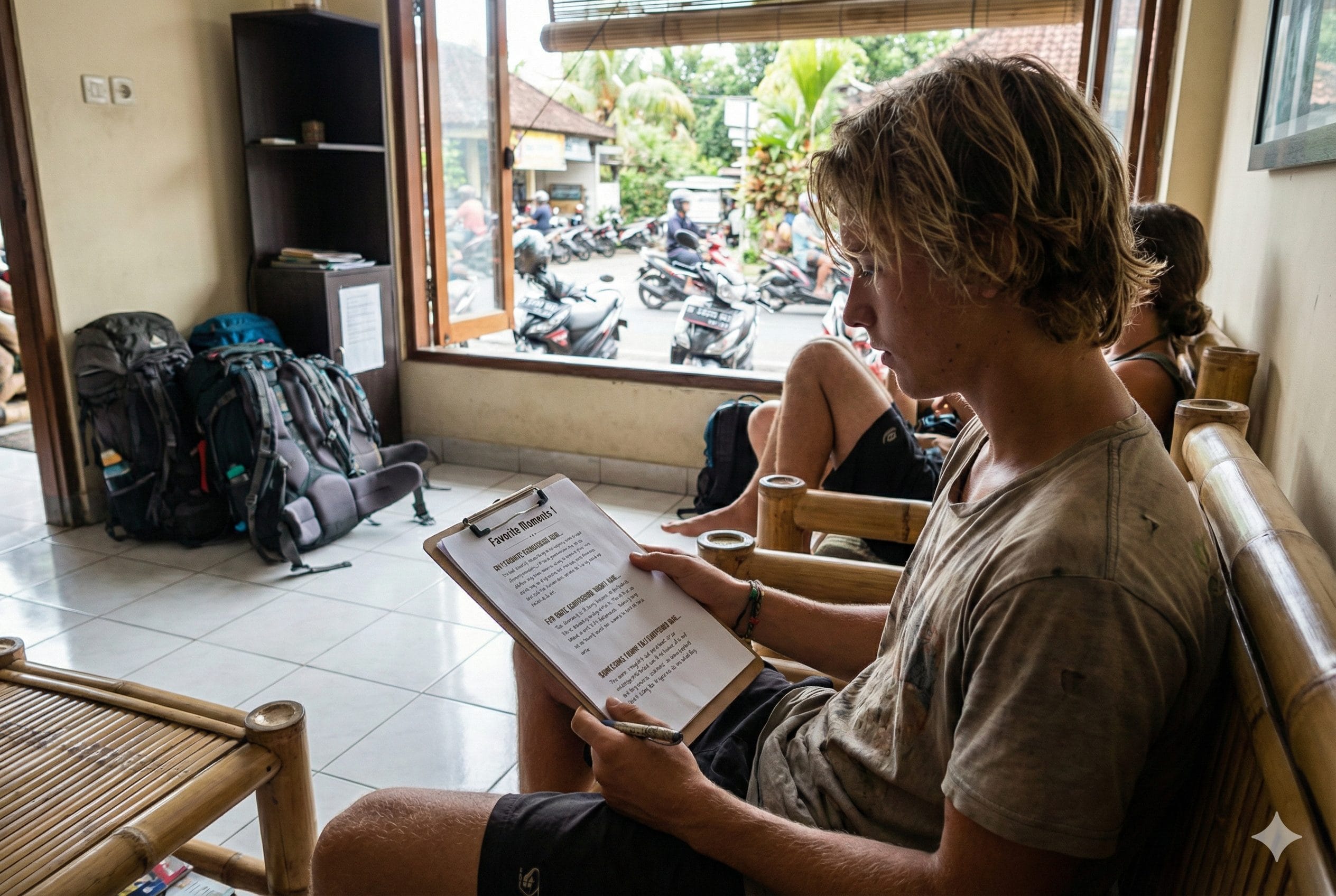
- The 3-Point System: Every night, force yourself to capture only three items:
- The Day’s Total Cost.
- One Free Joy.
- One Logistics Lesson (e.g., Always use the Blue Bus, not the Red Bus).
- Utilize Free WiFi Time: Never waste reliable free Wi-Fi time (at a library or café) on social media. Use that time to take photos of your handwritten expense logs and back them up to a free cloud service, ensuring your critical financial data is secure.
By integrating your journal into the core logistics of your trip, you transform it from a mere diary into a powerful, indispensable tool for financial management and memory capture.