
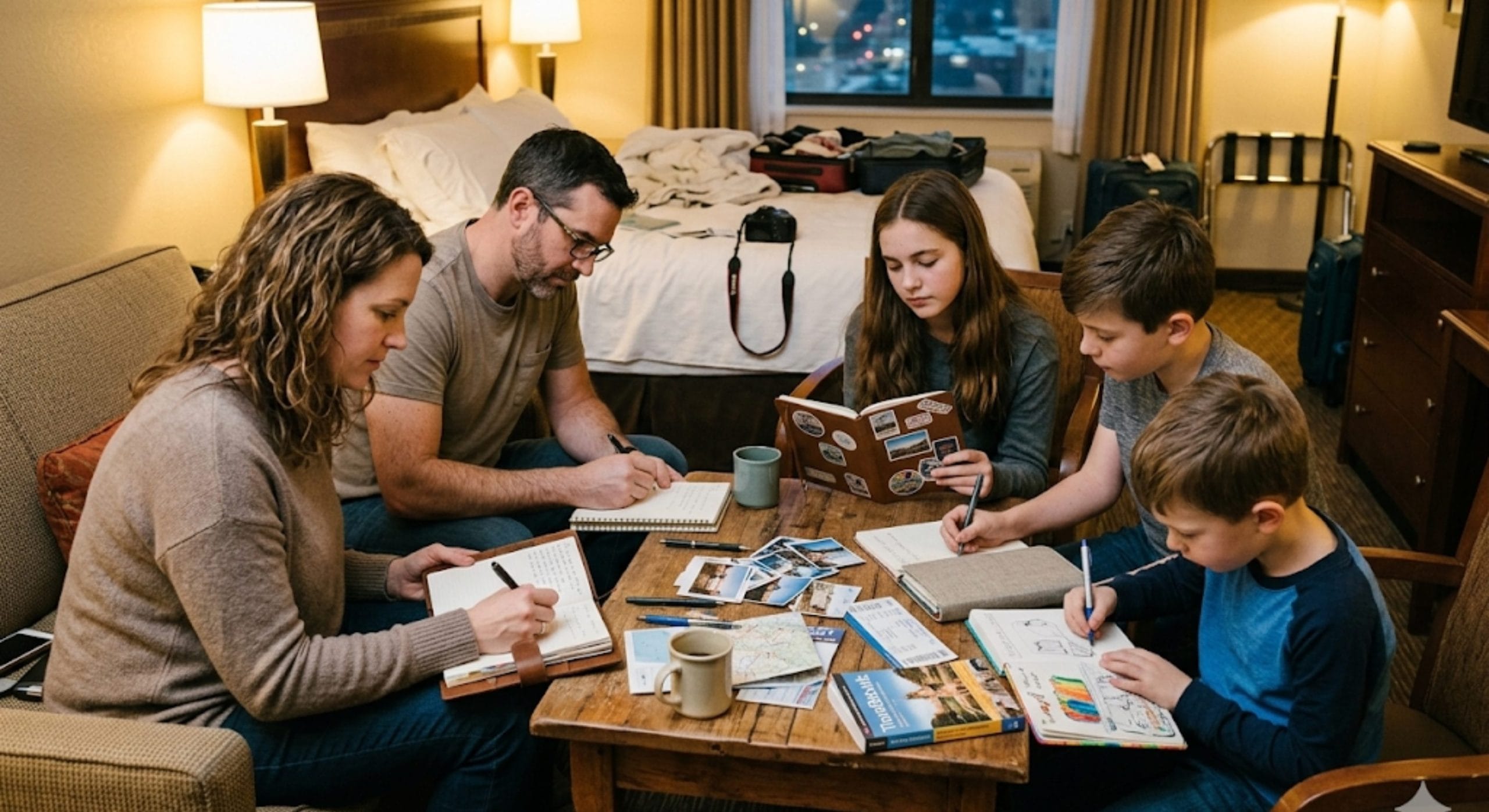
How to Build a Travel Journal Routine While Traveling with Kids
Traveling with children is an exercise in delightful chaos. Between managing itineraries, snacks, and meltdowns, finding time for quiet, reflective journaling can feel impossible—like another chore added to an already packed day.
However, a travel journal routine is not just a way to save memories; it’s a powerful grounding tool for both parents and children, bringing structure and mindfulness to the hustle of vacation.
This is where you’ll find easy family vacation routines, mindfulness tips for traveling families, and ways to make journaling fun for kids. Here is the ultimate guide to establishing a sustainable, low-stress travel journaling routine that works for the whole family.
1. ⏱️ Find the Right Time Slot: The Power of Consistency
The biggest enemy of any routine is inconsistency. You need to identify a time block that is naturally less chaotic and commit to it daily.
A. The Golden 10-Minute Wind-Down (Most Recommended)
- When: Right after dinner, but before the evening bath/shower routine, or right before the kids get into bed.
- Why it Works: Kids are physically tired but mentally stimulated from the day. Journaling is a perfect, quiet activity to process excitement, making for a smoother transition to sleep.
B. The Morning Coffee Pause
- When: While parents are having their morning coffee and kids are still in their pajamas.
- Why it Works: It sets a reflective tone for the day. Kids can record their expectations or their dreams, making the journal a forward-looking tool.
Rule: Stick to the same time every day. After three days, it will feel less like an assignment and more like a comforting family ritual.
Check out our Kids Travel Journals (with plenty of activities) for ANY and ALL Destinations, Ages 4-7 and 8-12.

2. 🪑 The Designated Journaling Zone
Environment matters. Create a clear distinction between “play time” and “reflection time” to help kids focus immediately.
- At the Hotel/Hostel: Designate a specific spot—a corner of the hotel room desk, a quiet booth in the breakfast area, or the bottom bunk of the hostel.
- On the Road: If using a car, ensure kids have a clip-on clipboard or lap tray. Keep the journal kit accessible (and separate from the snack bag) so there’s no scrambling.
- The “Shared Silence” Rule: When the journals come out, the devices (phones, tablets, TV) go off. Parents should be writing in their own journals, reinforcing that this is a family activity, not isolated homework.
3. 🧠 Keep the Content Low-Effort, High-Impact
The routine should prioritize speed and fun over narrative perfection. The goal is documentation, not literary excellence.
A. The “Rose, Bud, Thorn” Framework
- How it Works: This is the ultimate low-effort prompt for family reflection. Everyone answers three simple points:
- Rose: What was the favorite, most beautiful, or best part of the day?
- Thorn: What was the biggest challenge, frustration, or negative part of the day?
- Bud: What is one thing I’m looking forward to tomorrow?
- Why it Works: It’s fast, structured, and helps kids process both positive and negative emotions.
B. The Visual Focus (Doodles & Stickers)
- For Young Kids: Journaling can be 90% drawing. Ask them to draw the “Silliest Face I Saw” or the “Tastiest Food I Ate.”
- For Older Kids: Encourage the use of stickers, washi tape, and colored markers to decorate their pages. If it looks fun and artistic, they are more likely to participate willingly.


4. 🥇 Accountability & Reward (Non-Monetary Incentives)
A little positive reinforcement can go a long way in establishing a lasting habit.
- The Scribe Swap: For younger children, let them be the “Boss.” They draw a picture, and the parent is the official scribe, writing down the child’s exact dictated story. This makes the child feel important and valued.
- Journaling Before Screen Time: Make journaling the essential gatekeeper to a preferred activity. “We can watch a movie or play a game once everyone has completed their Rose, Bud, Thorn entry.”
- The Final Prize: The biggest reward is the finished book. Make a public declaration about the finished journal being a “Super-Secret Treasure” or an “Official Family Artifact.” Promise a special treat (like a trip to the ice cream parlor) on the day the final page is filled.
By building a predictable, fun, and low-pressure routine, you ensure that your travel journal becomes one of the most cherished and successful parts of your family vacation.