How to Use Your Travel Journal for Travel Planning Before You Leave
Before the adventure begins, your travel journal shouldn’t be sitting on a shelf, pristine and blank. It should be the central hub for preparation, organization, and inspiration.
Far beyond being a place to record memories, your journal is a powerful tool for stress reduction, budget management, and goal-setting—all before you step onto the plane. This guide will help you organize travel documents and implement effective pre-trip planning strategies.
Here are four essential ways to use your travel journal to get organized and mentally prepared before you leave home.
1. 📋 The Master Logistics Hub: Essential Data at Your Fingertips
Trying to find a confirmation number across five different email threads is a nightmare. Dedicate the first few pages of your journal to creating a clean, organized “Master Logistics Hub.”
- Key Information Table: Draw a simple table to organize crucial details. Use column headers like:
- Flight/Train: Number, Departure Time, Confirmation Code.
- Accommodation: Address, Check-in/Check-out Times, Host/Hotel Contact Number.
- Insurance: Policy Number, Emergency Phone Line.
- Emergency Contacts: Local Embassy Address, Home Contact Name/Number.
- The “Pocket Test”: After writing it down, take a photo of this section with your phone. This ensures that even if your journal is packed away, the critical information is always accessible in your photo library.


2. 💰 Financial Forecast: Budgeting and Expense Tracking Templates
Travel stress often comes from financial surprises. Creating a robust budget template in your journal not only saves money but brings peace of mind.
- The Budget Spreadsheet: Design a simple two-page spread:
- Left Page (Budget): List major categories (Flights, Accommodation, Food, Activities, Souvenirs) with the Estimated Cost for each.
- Right Page (Tracking): Set up columns for Date, What, and Actual Cost. Leave a column for running totals to update nightly.
- Currency Conversion Cheat Sheet: Dedicate a small box to listing the main currency conversion rates you’ll need (e.g., $1 \text{ USD} = 7.5 \text{ DKK}$). This eliminates needing to pull out your phone calculator every time you shop.
3. 🎯 Setting Goals: Expectations, Intentions, and Goals
The best pre-trip journaling is about setting intentions. By documenting your expectations, you prepare yourself for both joy and potential disappointment.
- The “Why” Entry: Start with a reflection: “Why did I choose this destination, and what is my biggest goal for this trip?” (Is it rest? Cultural immersion? Adventure? Skill-building?)
- The Three Pillars: Define three key intentions for the trip, organized by category:
- Personal Growth Goal: (e.g., “I will speak the local language whenever possible.”)
- Experience Goal: (e.g., “I will visit the three non-touristy neighborhoods.”)
- Mindfulness Goal: (e.g., “I will spend 10 minutes every day off my phone.”)
- The Benefit: Journaling your goals provides a framework for success and gives you valuable material for post-trip reflection on what you achieved.
Check out our Quick-Fill Travel Journals on Etsy:


Quick-FIll Travel Journal for ANY Destination
The travel journal for explorers who want to remember everything, but would rather be living the adventure than staring at a blank page.

4. 🗺️ Soft Itinerary and Discovery Buckets
Avoid rigidly scheduling every hour, but use your journal to organize your “discovery buckets”—the places and activities that inspire you.
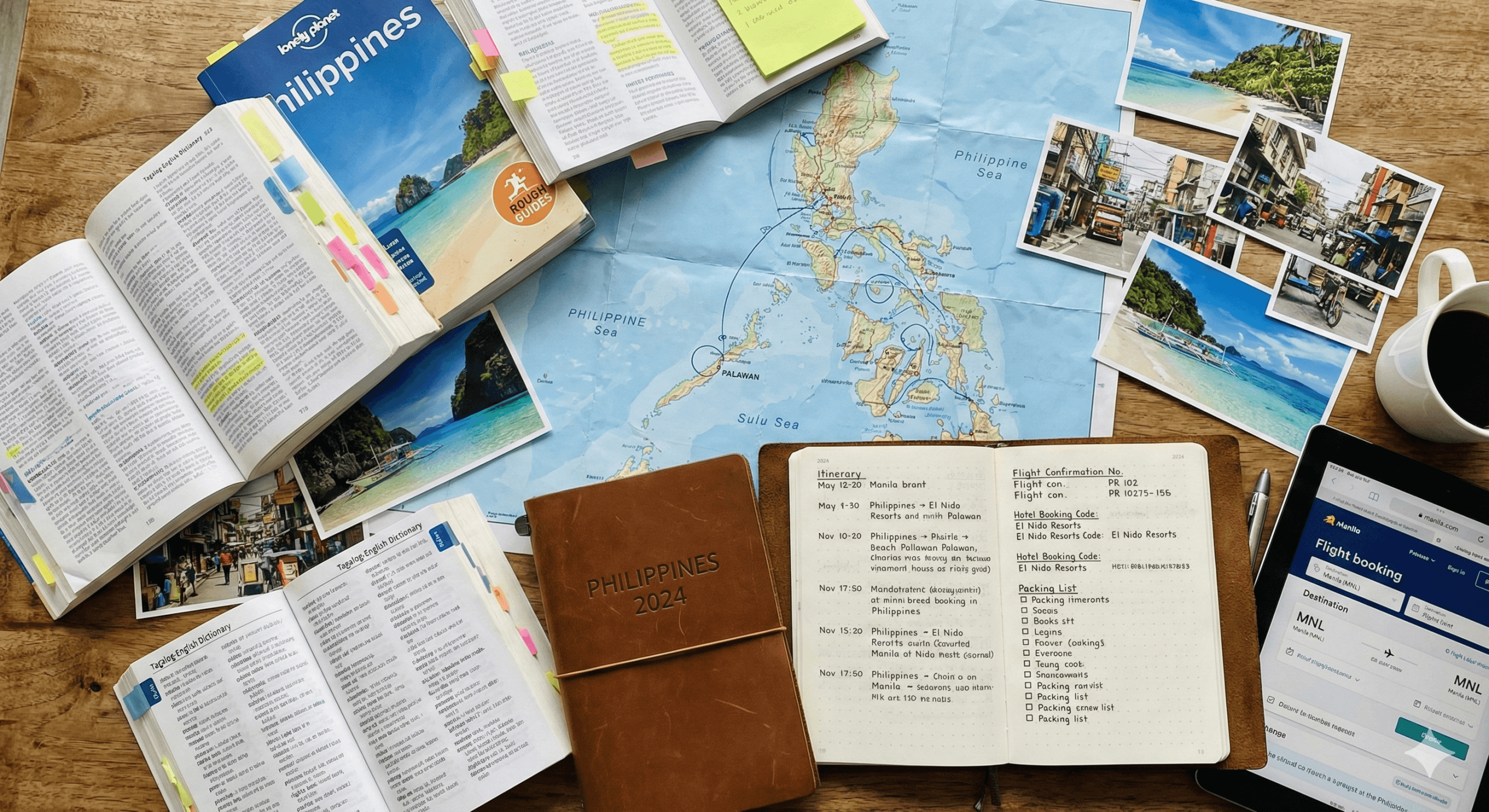
- The “Soft” Itinerary: Instead of a strict timeline, dedicate a page to each city or major location. List confirmed bookings (the “hard” schedule) but also list 5-7 “Things I Must See” and “Things I Might Do If I Have Time.”
- Research Log: Create a section for research notes. List restaurant recommendations, local phrases, or interesting historical facts you’ve researched. This keeps all that web-surfing knowledge in one offline, physical location.
- The Packing List: Use your journal to create a comprehensive “Must-Pack” checklist. Include a column for a checkmark and a second column labeled “Did I Use This?” to fill out after the trip for future packing optimization.
By treating your travel journal as your primary planning and organization hub, you reduce the logistical chaos of travel, ensure you don’t forget essential documents, and start your adventure with clear intentions.