

Family Fun & Memories: Getting Kids Excited About Travel Journaling
Every family trip is a collection of fleeting, beautiful moments. But how do you stop those magical memories—the funny hotel breakfast, the smell of the ocean, the excitement of a new landmark—from fading into a blur?
The answer is Family Travel Journaling.
Travel journaling for kids isn’t just a fun activity; it’s a powerful tool that transforms passive sightseeing into active learning, helps build literacy skills, and creates a tangible family heirloom. We know that families are looking for ways to make their family vacations more meaningful and to keep their kids engaged while traveling.
Here is the ultimate guide to introducing travel journaling to your children, no matter their age, and ensuring they are genuinely excited to grab a pen, pencil, or tablet!
Check out our Kids Travel Journals (with plenty of activities) for ANY and ALL Destinations, Ages 4-7 and 8-12.

🎨 Choose the Right Format: Appealing to Every Age and Style
The key to engagement starts with the tool itself. Let’s tailor the recommendation to the kid!
1. Physical Journals: The Hands-On Experience
- Best For: Younger children (4-10) who love to draw, cut, and paste.
- What to Look For:
- Interactive Prompts: Choose journals with fun, pre-printed activities like “Draw the funniest face you saw today” or “Design a flag for this country.”
- Plenty of Blank Space: Kids want room to doodle and paste their “treasures” (tickets, leaves, napkins). Don’t choose an all-text journal.
- Durable & Portable: A hardcover will withstand a backpack, but a spiral or coil-bound journal is easier to write in when sitting on a bumpy train or a park bench.
2. Printable Journals: Budget-Friendly & Custom
- Best For: All ages; ideal for long trips where you don’t want to carry a massive book.
- The Power of Customization: Printables allow you to select only the pages your child will use. You can print drawing pages for a five-year-old and detailed reflection pages for a teenager.
- Tip: Punch holes and keep them in a small, lightweight binder. This allows kids to swap pages and easily add extra collected items.
3. Tablet-Ready Interactive Journals (Digital)
- Best For: Pre-teens and teenagers who prefer screens and digital tools.
- Engaging Features: These are perfect for incorporating the digital memories kids already make. They can:
- Drop in Photos & Videos: Instead of drawing a landmark, they can insert the perfect shot they took.
- Use Voice-to-Text: Great for fast, reflective entries at the end of a long day.
- Annotate Maps: They can circle the best ice cream shop or the hidden trail they found.
Check out our Quick-Fill Travel Journals for Kids on Etsy:
For Ages 4-7

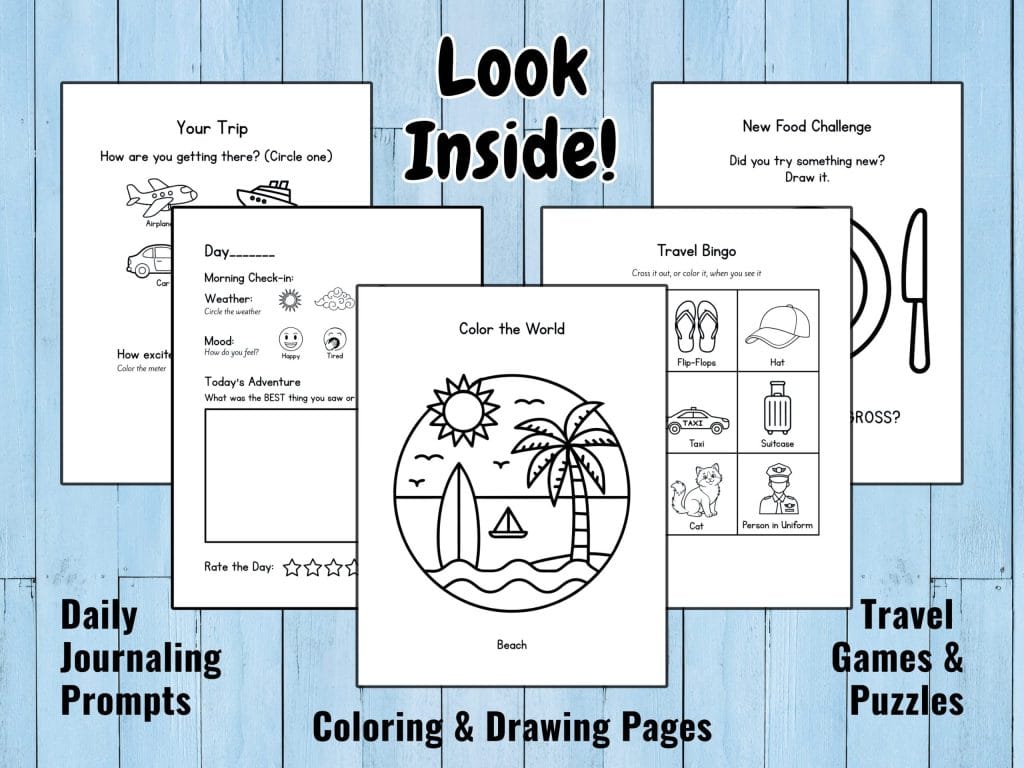
Kid’s Activity and Quick-Fill Travel Journal for ANY Destination
Built for young explorers with big plans and zero time for blank pages. Quick-fill prompts for fast memories and more adventure.
- Zero “Homework” Vibes: Simple prompts that take minutes, not hours.
- Memory Insurance: Captures the best parts of the trip before they’re forgotten in the excitement.
For Ages 8-12

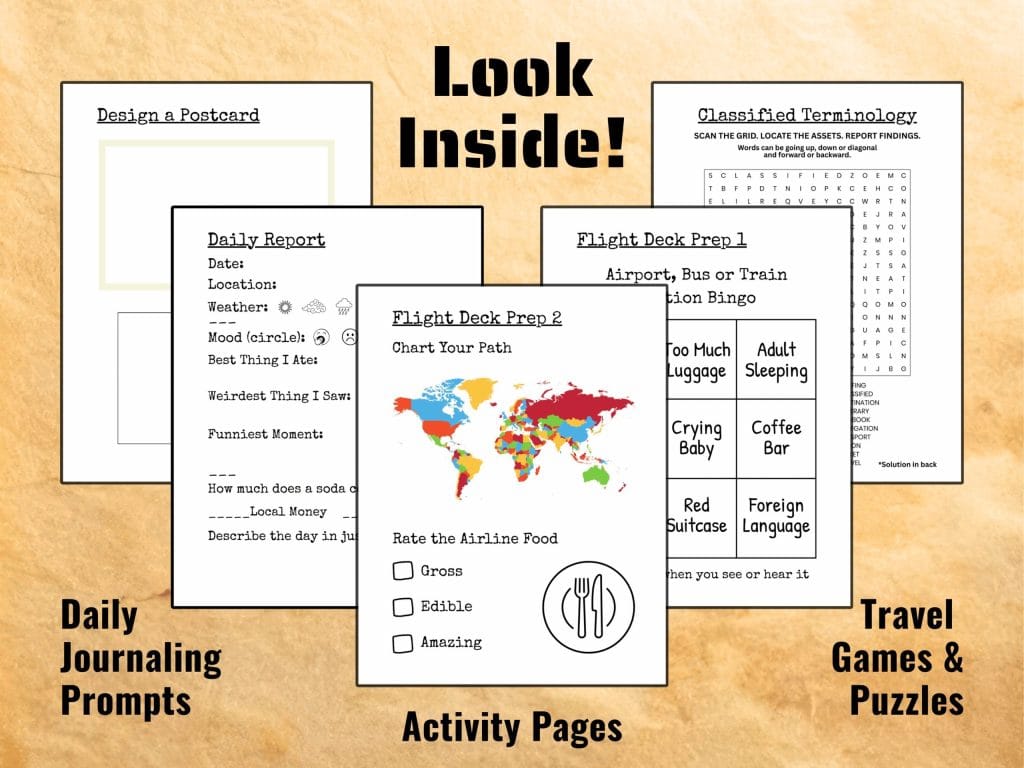
💡 Top Strategies to Spark Kids’ Journaling Excitement
The secret to success is not enforcing journaling as homework, but making it a core part of the adventure.
1. The “Five Senses” Challenge
Instead of asking, “What did you do today?” which often gets a shrug, use the five senses to guide their reflection. This works for all ages and encourages observational skills.
| Prompt Category | Example Questions to Ask |
| Sight | What was the most surprising color you saw? Draw the weirdest sign. |
| Sound | What sounds were different from home? What music did you hear? |
| Smell | What did the market/ocean/forest smell like? Describe the scent of a new food. |
| Taste | Give the new food you tried a 5-star rating. Create a menu description for it. |
| Touch | What was the strangest thing you picked up? Describe the sand/stone/fabric. |
2. The Memento Mission
Before the trip, give each child a small zip-top pouch or envelope. Their mission is to be a “Travel Curator”—collecting small, flat items to glue into their journal:
- Ticket stubs (bus, museum, train)
- Foreign currency/coins
- Labels from favorite snacks
- Small dried flowers or leaves
- Napkins or coasters from unique restaurants
3. The Family Story Time Routine
Journaling works best when it becomes a comforting routine. Set aside 10-15 minutes at the same time each day—perhaps after dinner, right before bed, or while waiting for food at a restaurant.
- Make it a Shared Experience: Sit together and let everyone—parents included!—work on their own journals. When you’re all doing it, it’s not an assignment; it’s family bonding time.
- The “Rose and Thorn”: Start a nightly discussion: “What was the Rose (best part) of your day?” and “What was the Thorn (worst or most challenging part)?” This gives the kids easy content to write about while helping them process their emotions.


👨👩👧👦 Journaling for Different Age Groups
For Preschoolers (Ages 3-5)
- Focus: Drawing, gluing, and dictation.
- Your Role: You are the scribe! Have them draw a picture of their favorite thing, and then you write their exact words next to the picture. This shows them their stories are valuable.
For Elementary Kids (Ages 6-12)
- Focus: Prompts, lists, and creativity.
- Keep it Fun: Encourage them to create lists: “Top 5 Animals Spotted,” “Things I Miss About Home,” “Best Jokes I Heard.” Let them use markers, stickers, and their imagination.
For Teens (Ages 13+)
- Focus: Reflection, photography, and personal space.
- Encourage Deeper Thought: Offer less structured prompts, such as: “What is one thing about this culture you wish your friends could experience?” or “Write a letter to your future self about how this trip changed your perspective.” Respect their privacy; the journal should be a safe space for their thoughts.
By providing kids with the right tools and making family travel journaling a relaxed, creative, and shared experience, you’re not just documenting a trip—you’re teaching them to observe, reflect, and cherish the adventure.